Denmark is a Scandinavian nation situated in Northern Europe, bordered by Germany to the south and surrounded by the North Sea and the Baltic Sea.
With a population of just under six million, it may appear small on the map, yet it consistently ranks among the world’s most livable and prosperous countries.
Visitors are drawn to its medieval towns, royal palaces, and an extensive coastline that offers endless opportunities for outdoor activities.
Expats are equally attracted by the strong welfare model, excellent public services, and a work culture built on trust and balance.

This article is designed as a complete guide to Denmark. It covers history, geography, politics, culture, and everyday life, while also offering practical advice for travelers and those considering a permanent move.
By bringing together all aspects of the country, it aims to show why Denmark stands out as one of Europe’s most fascinating destinations.
Denmark’s appeal goes far beyond the well-known ideas of hygge or the colorful canals of Copenhagen.
It lies in the way Danes value equality, community, and their connection to nature.
Exploring these elements provides the key to understanding the country’s character.
By the end of this guide, you will have everything you need to know about Denmark — from its traditions and innovations to the qualities that make it both welcoming and unique.
Geography and Location
Denmark is located in Northern Europe and forms the southernmost part of Scandinavia.
The country shares a land border with Germany, while the rest of its territory is surrounded by water — the North Sea on the west and the Baltic Sea on the east.
Its geographical position has shaped Danish culture, trade, and politics for centuries, placing the country at a crossroads between continental Europe and the Nordic region.
The Danish mainland, known as Jutland (Jylland), is directly connected to Germany, while more than 400 islands comprise the rest of the country.
Among these, the largest are Zealand (Sjælland), where Copenhagen is located, Funen (Fyn), and the island of Bornholm in the Baltic Sea.

Many smaller islands are linked by bridges or ferries, making Denmark a country defined by both land and sea.
Climate and Seasons
Denmark has a temperate coastal climate, with mild summers and relatively cool winters. Rain is spread throughout the year, and the changing seasons play a major role in Danish life.
Long summer days are often spent outdoors, cycling or at the beach, while winter brings short daylight hours and the cozy traditions that inspired the concept of hygge.
For visitors, packing for the weather is essential, as conditions can change quickly.
Nature and Landscape
Although small in size, Denmark offers a varied landscape.
Flat farmland dominates much of the country, but there are also rolling hills, heathlands, forests, and more than 7,000 kilometers of coastline.

This makes it one of the most accessible countries in Europe for outdoor activities such as cycling, sailing, and hiking.
National parks like Thy National Park in Jutland and Mols Bjerge showcase the natural beauty that defines Danish landscapes.
Denmark’s geography also includes Greenland and the Faroe Islands, which are part of the Kingdom of Denmark.
These territories provide the country with a unique Arctic dimension and strategic importance far beyond its European borders.
For a visual overview, you can explore an interactive map of Denmark on VisitDenmark.
A Short History of Denmark
Understanding Denmark today requires a look at its long and fascinating history. From the age of the Vikings to the modern welfare state, Denmark has played an important role in shaping Northern Europe and beyond.
The Viking Age
Denmark’s story is often most famously associated with the Vikings, who lived from roughly the 8th to the 11th century.
Danish Vikings were explorers, traders, and warriors who sailed across Europe, leaving their mark from England and France to the Mediterranean.
Important archaeological sites such as Jelling, often referred to as the “birthplace of Denmark,” highlight this era.
The Jelling stones, erected by King Harald Bluetooth in the 10th century, are UNESCO World Heritage monuments and symbolize the transition from paganism to Christianity.
The Medieval Kingdom
After the Viking Age, Denmark emerged as a powerful medieval kingdom.
By the 14th and 15th centuries, it controlled large parts of Scandinavia and northern Europe, including Norway and Sweden.
The Kalmar Union, established in 1397, united Denmark, Norway, and Sweden under one monarch. Although Sweden later left the union, Denmark maintained its influence in the region.
Denmark-Norway and the Loss of Power
For centuries, Denmark and Norway were ruled as a dual monarchy, often referred to as Denmark-Norway.
This union lasted until 1814, when Norway was ceded to Sweden after Denmark found itself on the losing side of the Napoleonic Wars.
Over time, Denmark’s international influence diminished, but the country adapted to its new role as a smaller European state.
19th Century Reforms and Democracy
The 1800s brought major changes. Denmark transitioned from an absolute monarchy to a constitutional monarchy in 1849, establishing one of the oldest democratic constitutions in Europe.
This period also marked the loss of the duchies of Schleswig and Holstein to Prussia in 1864, a defeat that still shapes Danish identity and historical memory.
The World Wars
During World War I, Denmark remained neutral, but in World War II it was occupied by Nazi Germany from 1940 to 1945.
Despite being under occupation, Denmark maintained its government for much of the war and protected its institutions.
One of the most notable chapters from this period is the successful effort to rescue most of the Danish Jewish population by secretly transporting them to safety in Sweden.
For a deeper dive into Danish history, you can explore resources from The National Museum of Denmark.
A Modern Welfare State
Denmark is often described as one of the most socially progressive countries in the world.
The Danish welfare model provides universal healthcare, free education, and strong social security.
This model is funded through relatively high taxes, but most Danes view it as a fair exchange for the security and equality it brings.
The system reflects a collective belief that society should support its citizens from childhood to old age.
Equality and Social Trust
One of the most striking features of Danish society is its high level of trust. Surveys consistently rank Denmark among the world’s most trusting countries.
Danes generally believe that other people – and the government – will act fairly.
This trust is closely linked to the country’s low levels of corruption and its emphasis on equality.
Gender equality is also central to Danish life. Women play an active role in the workforce and politics, with Denmark regularly ranking high in global gender equality indexes.
Fathers are encouraged to take paternity leave, and both parents often share childcare responsibilities equally.
Janteloven – The Law of Jante
To understand Danish culture, it is important to know about Janteloven, or “The Law of Jante.” It is not a real law but rather a cultural concept that values humility and discourages boasting.
The idea is that no one should think they are better than others.
While modern Danes may not take Janteloven literally, it still influences how people behave socially. Modesty, down-to-earth attitudes, and respect for others are deeply rooted values.
Community and Social Life
Danish people are often described as reserved, especially compared to southern Europeans or Americans.
Friendships may take time to develop, but once formed, they are deep and long-lasting.
Many Danes place a high value on close social circles, often preferring small gatherings at home to large parties.
The Danish concept of hygge plays an important role in social life. Hygge refers to a cozy and warm atmosphere, often shared with friends or family.

It can mean gathering around candles, enjoying comfort food, or simply spending quality time together.
More than just a trend, hygge reflects a deeper cultural appreciation for balance, comfort, and wellbeing.
Immigration and Multiculturalism
In recent decades, Denmark has become more multicultural. Immigrants from Europe, the Middle East, and Asia contribute to the country’s diversity.
While integration and immigration policies remain a debated political topic, multiculturalism has shaped modern Danish cuisine, art, and business. Copenhagen, in particular, has grown into a cosmopolitan city where many cultures meet.
Work-Life Balance
Danes are known for having one of the best work-life balances in the world. The average work week is around 37 hours, and employees enjoy generous vacation time – typically five weeks per year.
Punctuality, efficiency, and cooperation are valued at the workplace, but free time is considered just as important.
A popular saying in Denmark is “arbejde for at leve, ikke leve for at arbejde” – work to live, don’t live to work.
This mindset is closely tied to the Danish concept of arbejdsglæde, which translates to “happiness at work.”
For Danes, work is not just about earning a salary but about finding meaning, balance, and satisfaction in what you do.
Combined with strong worker protections and supportive social structures, this focus on arbejdsglæde helps explain why Denmark consistently ranks among the happiest nations in the world.
Denmark Compared to the Other Nordic Countries
Although Denmark is often grouped with the other Nordic countries – Sweden, Norway, Finland, and Iceland – there are clear differences in both nature and culture.
Understanding these distinctions helps explain Denmark’s unique place in Scandinavia and beyond.

Nature and Geography
- Denmark is the flattest of the Nordics. The landscape is dominated by farmland, sandy coastlines, and gentle rolling hills. Unlike Norway and Iceland, there are no mountains or volcanoes, but Denmark’s long coastline (over 7,300 km) gives it a strong maritime identity.
- Norway is famous for fjords, dramatic mountains, and wild nature. Outdoor life is central to Norwegian culture.
- Sweden combines vast forests, thousands of lakes, and a mix of coastlines and mountains in the north.
- Finland is often called “the land of a thousand lakes” (in reality, it has over 180,000) and endless forests.
- Iceland stands out with volcanic landscapes, geysers, glaciers, and black-sand beaches – unlike anything else in Europe.
Work and Society
- Denmark is known for arbejdsglæde (happiness at work) and one of the world’s best work-life balances. The average work week is shorter than in most countries, and leisure time is highly valued.
- Sweden also prioritizes balance, with generous parental leave and progressive social policies, but tends to be more formal in the workplace compared to Denmark’s relaxed tone.
- Norway benefits greatly from oil wealth, with high salaries and strong welfare benefits, though work culture can feel more serious than in Denmark.
- Finland emphasizes punctuality and efficiency, with a quiet, reserved workplace culture.
- Iceland has a more flexible, entrepreneurial work culture, reflecting its small population and unique economy.
Humor and Mentality
- Danes are known for dry, sometimes dark humor and a relaxed, informal way of speaking – even to their bosses.
- Swedes are more reserved and polite; humor tends to be subtle and less direct.
- Norwegians share a similar humor to Danes but are often seen as more nature-focused and patriotic.
- Finns are known for very dry, sometimes self-deprecating humor, often delivered with a straight face.
- Icelanders are quirky and proud of their unique heritage, with humor that often draws on their isolation and folklore.
Culture and Everyday Life
- Denmark places huge importance on hygge – coziness and togetherness – and a strong sense of equality. Hierarchies are flat, and society values modesty (influenced by Janteloven).
- Sweden emphasizes consensus (lagom, meaning “just the right amount”) and avoids conflict.
- Norway has a culture built around outdoor life (friluftsliv) and independence.
- Finland treasures silence, saunas, and a strong sense of national resilience (sisu – inner strength).
- Iceland has a close-knit society where everyone knows each other, with traditions deeply tied to nature and storytelling.
Society and Welfare
All Nordic countries share strong welfare systems, but there are nuances:
- Denmark pioneered the “flexicurity model” – it’s easy to hire and fire employees, but workers are protected by strong social benefits.
- Sweden has more structured labor policies and stronger unions.
- Norway is one of the richest countries in the world due to oil, allowing even higher welfare spending.
- Finland is highly regarded for its world-class education system.
- Iceland, while smaller, has universal welfare but on a more limited scale due to its size.
Danish Traditions and Culture
National Holidays and Celebrations
Danish traditions are a fascinating blend of ancient customs, Christian heritage, and modern-day practices.
The year begins with Fastelavn, a carnival-like celebration where children dress in costumes, play games, and enjoy cream-filled buns called fastelavnsboller.
Easter (påske) is marked with decorated eggs, large family meals, and the famous tradition of sending “teaser letters” (gækkebreve) where children cut intricate paper patterns and write rhyming verses.
Christmas is the most beloved holiday in Denmark. Families decorate with candles, garlands, and small Danish flags on the Christmas tree.
After the dinner, families dance around the Christmas tree while singing songs.
After the singing, the presents are opened.
On Christmas Eve, families gather for a feast that often includes roast duck, pork, or goose, followed by risalamande, a rice dessert with almonds.
A hidden almond in the dessert brings the finder a small prize, a tradition that brings laughter and excitement to the table.
Folk Traditions and Music
Folk traditions remain alive in rural Denmark, though they are often celebrated more for cultural heritage than everyday life.
Traditional Danish folk music, with fiddles and accordions, is sometimes performed at festivals and community gatherings. Folk dancing is also preserved by local associations, keeping a sense of history alive.
At the same time, Denmark has a thriving modern cultural scene. Copenhagen is famous for its jazz festivals, Roskilde Festival is one of Europe’s largest music events, and Danish design and film are internationally celebrated.
The balance of tradition and innovation is one of the hallmarks of Danish culture.
Biggest and most popular festivals in Denmark:
- Roskilde Festival (Biggest in Northern Europe)
- Skanderborg Festival(Smuk Fest)
- Northside
- Tinderbox
- Copenhell
- Jelling Musikfestival
- Distortion
- Heartland Festival
Hygge – A Cultural Phenomenon
No discussion of Danish culture would be complete without hygge. While the word has no direct English translation, it embodies a feeling of warmth, coziness, and wellbeing.

Candles, warm drinks, and good company are essential ingredients. Hygge is not only about interior design or lifestyle products – it’s a cultural mindset.
It reflects how Danes create comfort in everyday life, especially during the long, dark winters.
Royal Traditions
As one of the world’s oldest monarchies, Denmark has deep royal traditions. The Danish Royal Family is highly respected and plays an important role in cultural life.

Events such as royal birthdays, jubilees, and national ceremonies are celebrated with flags, parades, and public gatherings.
While Denmark is a modern democracy, the monarchy remains a beloved symbol of continuity and national identity.
Food Culture
Food is another key part of Danish traditions. Smørrebrød – open-faced rye bread sandwiches topped with fish, cold cuts, or cheese – is a classic Danish dish.
Seasonal meals, like Christmas duck or Easter lamb, highlight the importance of food in family traditions.
In recent years, Denmark has also become a hub for world-class cuisine, with restaurants like Noma in Copenhagen redefining Nordic gastronomy.
Danish Flags and National Identity
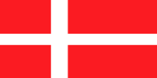
The Danish flag, the Dannebrog, is one of the world’s oldest national flags still in use. Unlike in many countries, Danes use their flag not only for national holidays but also for birthdays, weddings, and even casual celebrations.

A birthday cake is often decorated with small paper flags, reflecting how deeply the Dannebrog is tied to everyday joy and identity.
Education and Healthcare in Denmark
The Danish Education System
Education in Denmark is built on the principle of equal opportunity.
From a young age, children attend folkeskole, the public school system that runs from primary level through lower secondary education.
Education is free, and students are encouraged to think critically, work collaboratively, and develop creativity rather than simply memorizing facts.
After folkeskole, students can choose different paths. Some continue to gymnasium (upper secondary school), preparing for higher education, while others pursue vocational training.
Universities, such as the University of Copenhagen and Aarhus University, are globally recognized and attract international students.
Higher education is also free for EU citizens, and Danish students even receive a state grant (SU) to help cover living expenses.
Denmark’s focus on education is not only about academic achievement but also about preparing students to participate actively in a democratic society.
Group work, debates, and student involvement in decision-making are common features. This approach reflects the broader Danish value of equality and cooperation.
Lifelong Learning
Another cornerstone of the Danish system is lifelong learning. Many Danes return to education later in life through evening classes, adult education centers, or online programs.
This emphasis ensures that skills remain relevant in a rapidly changing job market and contributes to the strong work-life balance and sense of arbejdsglæde that characterize Danish society.
Healthcare for All
Denmark’s healthcare system is universal and funded by taxes.
All residents are entitled to free access to general practitioners, hospitals, and emergency care. Prescription medication is partly subsidized, ensuring affordability.
The system is decentralized, with regions managing hospitals and municipalities providing local health services.
Despite occasional debates about waiting times, the system is widely regarded as efficient and equitable.
Patients have the freedom to choose their doctor, and preventive care – such as regular checkups and screenings – is strongly emphasized.
International Recognition
Both the education and healthcare systems contribute significantly to Denmark’s international reputation.
Denmark consistently ranks high in global comparisons of human development, equality, and quality of life. For newcomers and expats, these institutions are often highlighted as some of the country’s greatest strengths.
Danish Art, Literature, and Design
Danish Literature
Denmark has a rich literary tradition that stretches back to the sagas and ballads of the Middle Ages.
One of the most famous Danish authors is Hans Christian Andersen, whose fairy tales such as The Little Mermaid and The Ugly Duckling have become timeless classics known all over the world.
His influence is so strong that Copenhagen’s Little Mermaid statue has become an international symbol of Denmark.
In modern literature, authors like Karen Blixen (known internationally as Isak Dinesen) brought Danish storytelling to a global audience.
Her memoir Out of Africa remains a classic of world literature.
Contemporary writers such as Peter Høeg, author of Smilla’s Sense of Snow, continue Denmark’s reputation for producing thought-provoking and internationally acclaimed works.
Art and Architecture
Danish art has historically been shaped by both local traditions and wider European influences. During the Danish Golden Age of the 19th century, painters such as Christoffer Wilhelm Eckersberg and his students captured everyday life and landscapes with striking clarity. Today, Denmark’s art scene remains vibrant, with modern museums like Louisiana Museum of Modern Art and ARoS Aarhus Art Museum attracting global visitors.
Architecture is another field where Denmark shines. Danish architects are known for their minimalist yet functional style, often blending modern innovation with respect for the environment.
Internationally recognized names such as Jørn Utzon, the architect of the Sydney Opera House, and firms like BIG (Bjarke Ingels Group) have placed Danish architecture firmly on the world map.
Danish Design – Function Meets Simplicity
Perhaps nothing has shaped Denmark’s international image more than its design tradition.
Danish design is world-renowned for its clean lines, functionality, and timeless appeal.
Furniture designers like Arne Jacobsen, Hans Wegner, and Børge Mogensen created pieces that are still celebrated and produced today.
The famous Egg Chair and Wishbone Chair are not just furniture but cultural icons.
This design philosophy extends beyond furniture to everyday objects, fashion, and urban planning.
The guiding principle is that beauty and utility should go hand in hand – a reflection of broader Danish values of balance, simplicity, and practicality.
Film and Performing Arts
Denmark has also made significant contributions to cinema. The Dogme 95 movement, led by directors Lars von Trier and Thomas Vinterberg, revolutionized film in the 1990s with its focus on raw, stripped-down storytelling.
Danish television series such as Borgen and The Killing have reached international audiences and sparked global interest in Scandinavian noir.
Performing arts are equally vibrant. The Royal Danish Ballet, one of the world’s oldest ballet companies, continues to uphold a long tradition of classical and modern performances.
Cultural Identity Through Creativity
What ties all these contributions together is a uniquely Danish perspective on creativity.
Art, literature, design, and performance are not only about aesthetics but about shaping how people live and interact.
From fairy tales that capture universal human experiences to furniture that makes daily life more comfortable, Danish creativity reflects the country’s broader emphasis on quality of life, community, and harmony.
Danish Nature and Environment
Landscapes and Geography
Although Denmark is a relatively small country, its landscape is surprisingly diverse.
The land is mostly flat, with gently rolling hills, fertile farmland, and an extensive coastline that stretches for more than 7,300 kilometers.

Because no point in Denmark is more than 52 kilometers from the sea, water plays an important role in both the scenery and daily life.
To the west lies the North Sea, with its wide sandy beaches and powerful winds, while the east is bordered by the calmer waters of the Baltic Sea.
Denmark also includes over 400 islands, of which around 70 are inhabited. The largest islands are Zealand (home to Copenhagen), Funen, and the North Jutlandic Island.
Climate
Denmark has a temperate maritime climate, meaning mild winters and cool summers. The weather can be unpredictable, with sudden rain showers and shifting winds.
Winters are generally grey and windy, but not extremely cold compared to other Nordic countries. Summers are light and pleasant, with long days and temperatures that rarely exceed 25°C.
Because of Denmark’s northern location, daylight hours vary dramatically. In summer, the sun may not set until nearly 11 p.m., while in winter, days can be as short as seven hours.
This contrast strongly influences Danish lifestyle and traditions – long summer evenings are cherished, while winter is the season of hygge, where candles and coziness bring light to the darkness.
Flora and Fauna
Denmark’s natural environment is shaped by its agricultural history, but there are still plenty of wild landscapes. Heathlands, beech forests, and coastal dunes are common. The beech tree is Denmark’s national tree, often celebrated in poetry and song.
Wildlife includes deer, foxes, hares, and seals along the coasts. Birdwatching is particularly popular, as Denmark lies along a major migration route. The island of Fanø and the Wadden Sea area attract thousands of migratory birds every year.
Protected Nature Areas
Denmark takes pride in preserving its natural environment. The Wadden Sea, a UNESCO World Heritage site, is one of Europe’s most important tidal wetlands and home to countless species of birds, fish, and seals.
National parks such as Thy National Park in northern Jutland and Mols Bjerge National Park on the Djursland peninsula showcase the country’s varied landscapes.

These areas are not just protected for biodiversity but are also popular destinations for hiking, cycling, and camping.
Outdoor activities are deeply ingrained in Danish culture, reflecting a close relationship with nature.
Environmental Awareness and Sustainability
Denmark is a global leader in sustainability and environmental policy.
The country has ambitious climate goals, aiming to become climate-neutral by 2050. Wind power plays a crucial role – Denmark was one of the first countries to invest heavily in wind energy, and today wind turbines generate around half of the country’s electricity.
Urban planning also reflects environmental priorities.
Cities like Copenhagen are designed for cyclists, with extensive bike lanes and infrastructure that make cycling more popular than driving for many residents. Waste reduction, recycling, and renewable energy are seen not just as policies but as part of everyday life.
Outdoor Lifestyle
Nature is not only something Danes admire – it is something they actively enjoy. The idea of friluftsliv, or “open-air life,” encourages people to spend time outside in all seasons.
Whether it is swimming in the sea, hiking in forests, or enjoying a picnic in a city park, being outdoors is considered essential for wellbeing.
Even in winter, the tradition of winter bathing – plunging into icy water, often followed by a sauna – has grown in popularity. For many Danes, connecting with nature is a way to stay balanced, healthy, and happy.
Food and Danish Cuisine
Traditional Danish Dishes
Danish cuisine is rooted in simplicity, freshness, and local ingredients. Traditionally, meals reflected the agricultural and coastal lifestyle of the country, with hearty dishes designed to sustain people through long winters.
Rye bread (rugbrød) is a staple of the Danish diet, dense and nutritious, often used as the base for smørrebrød – open-faced sandwiches topped with fish, cold cuts, or cheese, and carefully decorated with herbs, onions, and pickles.
Another classic dish is frikadeller, Danish meatballs usually made of pork, served with potatoes and gravy.
Pork is central to many traditional meals, and roast pork with crackling (flæskesteg) is especially popular at Christmas. Fish, too, has always been important, with pickled herring (sild) being a must at festive lunches.
Danish Pastries and Baking
Internationally, Denmark is perhaps best known for its pastries – though interestingly, what the world calls “Danish pastries” are locally referred to as wienerbrød (“Viennese bread”).
These buttery, flaky treats filled with custard, jam, or nuts are a common feature at bakeries across the country.
Bread culture is taken seriously in Denmark. Besides rye bread, freshly baked rolls (boller) and sourdough breads are everyday staples.
A typical Danish breakfast often includes bread with cheese, jam, or cold cuts, accompanied by coffee – which Danes drink in large quantities.
Seasonal and Festive Foods
Danish cuisine is closely tied to the seasons.
Around Easter, lamb and eggs are popular.
At Christmas, the dinner table is filled with roast meats, caramelized potatoes, red cabbage, and rich desserts like risalamande – rice pudding with whipped cream and almonds, often accompanied by cherry sauce.
Midsummer, or Sankt Hans Aften, is celebrated with bonfires and outdoor barbecues, reflecting the Danish love of gathering outdoors in the long summer evenings.
New Nordic Cuisine
In recent decades, Denmark has become a global leader in gastronomy thanks to the New Nordic Cuisine movement.
Pioneered by chefs such as René Redzepi of the world-famous restaurant Noma in Copenhagen, this movement emphasizes seasonal, local, and foraged ingredients prepared in innovative ways. It has transformed Denmark into a food destination, attracting culinary travelers from all over the world.
New Nordic Cuisine is about more than fine dining; it reflects broader cultural values of sustainability, respect for nature, and creativity.
Wild herbs, berries, seaweed, and even insects have made their way onto menus, redefining what Danish food can be.
Michelin-Starred New Nordic Restaurants in Denmark
- Noma (Copenhagen) – 3 Michelin stars, globally recognized as the birthplace of New Nordic Cuisine.
- Geranium (Copenhagen) – 3 Michelin stars, known for elegant plant-based dishes with Nordic flair.
- Alchemist (Copenhagen) – 2 Michelin stars, combining gastronomy with art and storytelling in a groundbreaking dining experience.
- Jordnær (Gentofte) – 2 Michelin stars, celebrated for seafood-driven interpretations of New Nordic.
- Kadeau (Copenhagen & Bornholm) – 2 Michelin stars, rooted in the flavors and nature of Bornholm island.
- Frederikshøj (Aarhus) – 1 Michelin star, blending New Nordic philosophy with modern techniques.
- Domestic (Aarhus) – 1 Michelin star, focusing on local, sustainable Danish produce.
- Substans (Aarhus) – 1 Michelin star, a bright expression of contemporary New Nordic dining.
Drinks and Danish Beverages
Beer has long been a part of Danish culture. Breweries like Carlsberg and Tuborg are internationally known, but Denmark also has a thriving craft beer scene. During Christmas, Danes look forward to the seasonal release of julebryg (Christmas beer), a tradition marked by nationwide festivities.
Another traditional drink is snaps, a strong spirit often flavored with herbs or spices, commonly enjoyed during holiday lunches.
Wine production is limited, but Denmark is increasingly producing cider and experimenting with local vineyards.
Coffee, however, might be the most essential beverage of all. Danes are among the world’s top coffee consumers, and a cup of coffee often serves as the centerpiece of social gatherings, whether at home, at work, or in cafés.
Everyday Eating Habits
Despite the rise of gourmet dining, everyday Danish meals remain practical and down-to-earth. Lunch is often a quick smørrebrød or packed lunch, while dinner is a warm, home-cooked meal enjoyed with family.
Dining together is an important part of daily life, reinforcing social bonds and the cultural value of hygge.
Cities and Attractions in Denmark
Copenhagen – The Capital of Cool
Copenhagen is Denmark’s vibrant capital and the country’s main tourist destination.
Known for its colorful harbor Nyhavn, the Little Mermaid statue, and the royal residence at Amalienborg Palace, the city offers a perfect mix of history and modern life.
Tivoli Gardens, one of the world’s oldest amusement parks, attracts visitors with rides, concerts, and a magical atmosphere.

Copenhagen is also a global hub for design, cycling culture, and gastronomy, with world-renowned restaurants like Noma. T
he city’s neighborhoods each have their own charm: the bohemian vibe of Nørrebro, the fashionable shops of Vesterbro, and the relaxed maritime feel of Christianshavn.
Aarhus – The City of Smiles
Located on the Jutland peninsula, Aarhus is Denmark’s second-largest city and a cultural hotspot.
Highlights include the modern art museum ARoS, with its iconic rainbow panorama, and the open-air museum Den Gamle By, which recreates centuries of Danish urban life.
Aarhus is also a university city with a young and energetic atmosphere, full of cafés, music venues, and festivals.

Odense – The City of Hans Christian Andersen
On the island of Funen lies Odense, birthplace of fairy tale writer Hans Christian Andersen and the third biggest city in Denmark.
Visitors can explore his childhood home and museums dedicated to his life and works.
Odense also offers cozy streets, historic houses, and beautiful green spaces such as the Munke Mose park.
Aalborg – From Viking Roots to Modern Culture
In northern Jutland, Aalborg blends Viking history with modern innovation.
The Aalborg Historical Museum and Lindholm Høje Viking burial ground reveal the city’s ancient past.
Today, Aalborg is also known for its waterfront redevelopment, lively nightlife, and annual Aalborg Carnival – the largest in Northern Europe and not to forget Jomfru Ane Gade which is a street packed with bars, night clubs and good times.
Castles and Royal Residences
Denmark is dotted with castles and palaces, many of which are open to the public.
Kronborg Castle in Helsingør, famously known as Elsinore in Shakespeare’s Hamlet, is a UNESCO World Heritage site.
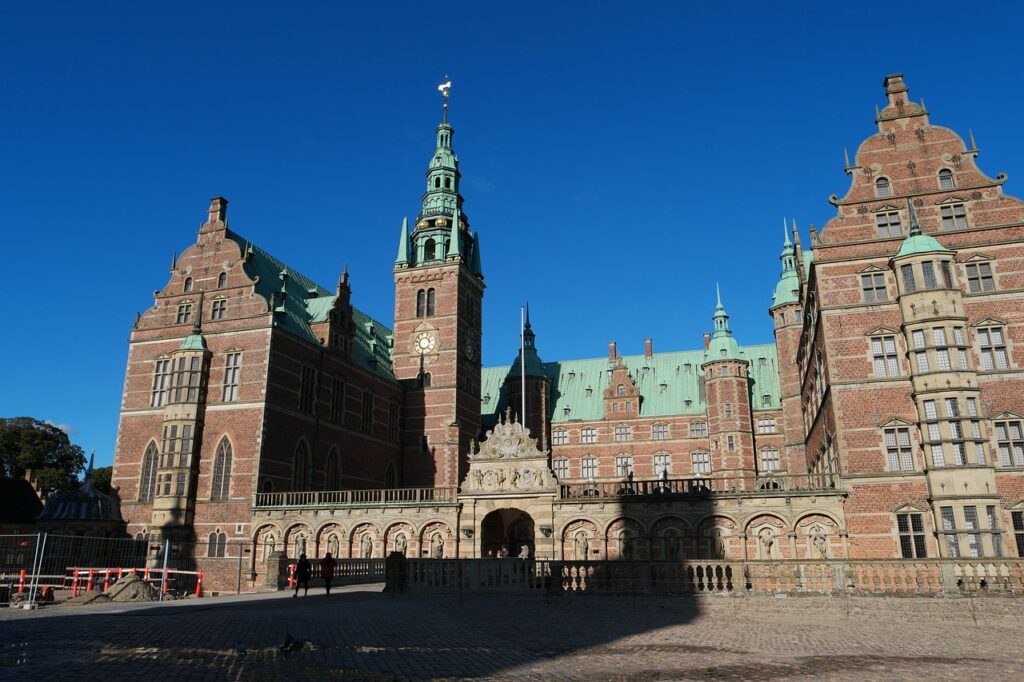
Frederiksborg Castle in Hillerød, surrounded by a lake and gardens, houses the National History Museum.
Amalienborg in Copenhagen remains the home of the royal family, where visitors can watch the changing of the guard.
LEGO Attractions – Fun for All Ages
No list of Danish attractions would be complete without mentioning LEGO, one of Denmark’s greatest inventions. In Billund, the birthplace of LEGO, you’ll find two world-famous attractions:
- Legoland Billund: Opened in 1968, it remains one of Denmark’s most popular tourist destinations.
With rides, rollercoasters, water attractions, and incredible miniature cities built entirely from LEGO bricks, it is a magical place for children and nostalgic adults alike. - LEGO House: Opened in 2017, this interactive museum and experience center takes LEGO to the next level.
Visitors can explore creative zones, build their own masterpieces, and dive into the history of the iconic toy. Designed by the BIG architecture firm, LEGO House itself resembles giant stacked bricks.
Together, these attractions make Billund a must-visit destination for families and LEGO enthusiasts from around the world.
Natural Wonders
Beyond the cities, Denmark’s natural attractions are equally captivating. On the west coast of Jutland, the Wadden Sea National Park offers bird migrations, seal safaris, and vast tidal landscapes.
The White Cliffs of Møn (Møns Klint) rise dramatically over the Baltic Sea and are one of the country’s most breathtaking natural sites.

Northern Jutland is home to Grenen, where the North Sea and the Baltic Sea meet in a striking natural phenomenon.
Here, visitors can stand with one foot in each sea. The shifting sand dunes of Råbjerg Mile near Skagen are another unique attraction.
Hidden Gems
While the big cities attract most visitors, smaller towns and islands offer authentic Danish charm.
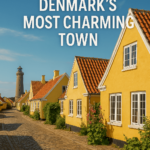
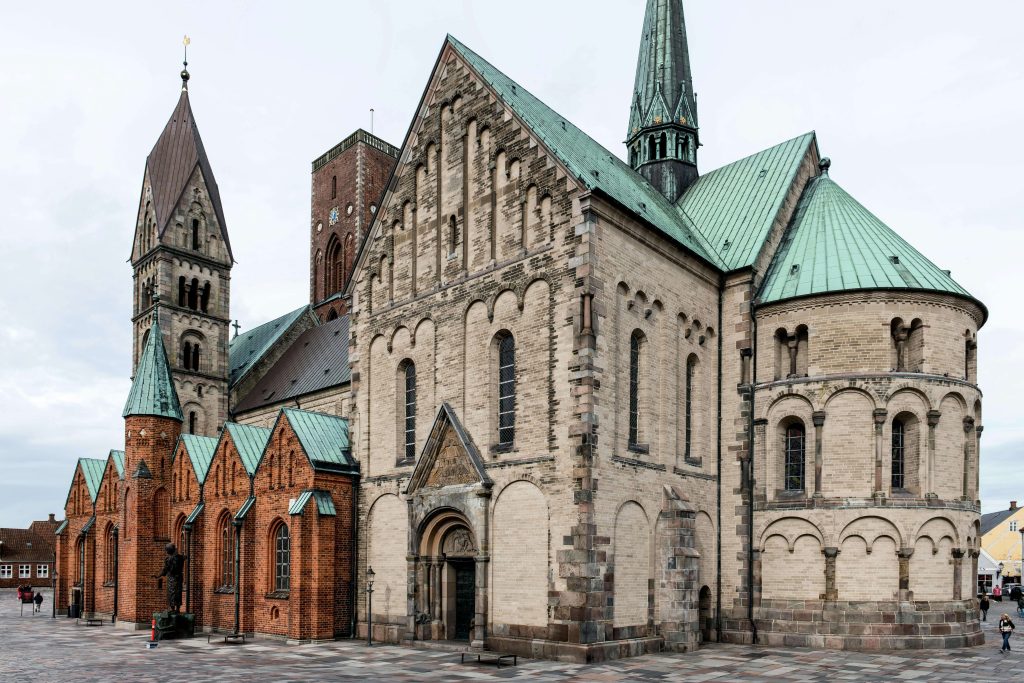
Ribe, Denmark’s oldest town, is filled with cobblestone streets and Viking heritage.
The island of Bornholm, located in the Baltic Sea, is known for its round churches, smoked herring, and stunning coastal cliffs.
Top Attractions in Denmark
1. Copenhagen – The Cultural Capital
Denmark’s capital is full of must-see landmarks. Besides Nyhavn and the Little Mermaid, highlights include:
- Tivoli Gardens – the historic amusement park from 1843.
- Amalienborg Palace – home of the royal family with the changing of the guard.
- Christiansborg Palace – seat of the Danish Parliament and Supreme Court.
- Strøget – one of Europe’s longest pedestrian shopping streets.
- Freetown Christiania – a colorful, alternative community in Christianshavn.
2. Aarhus – City of Smiles
Denmark’s second city is young and dynamic. Attractions include:
- ARoS Art Museum, with its famous rainbow rooftop walkway.
- Den Gamle By, the open-air museum recreating historic Danish towns.
- The Moesgaard Museum, offering world-class exhibitions on Viking and prehistoric life.
3. Odense – Fairy Tale City
Best known as the birthplace of Hans Christian Andersen. Key sights:
- Hans Christian Andersen Museum – a deep dive into his life and works.
- Odense Zoo, one of the best in Europe.
- Charming old quarters with cobblestone streets and colorful houses.
4. Aalborg – Viking Heritage Meets Modern Life
A northern city with both history and nightlife. Highlights:
- Lindholm Høje, an ancient Viking burial site.
- Aalborg Waterfront, full of modern architecture and cafés.
- Aalborg Carnival, the largest carnival in Northern Europe.
5. Kronborg Castle (Helsingør)
A UNESCO World Heritage site, known worldwide as Elsinore from Shakespeare’s Hamlet. Visitors can tour the grand halls and dungeons, and enjoy views across the Øresund to Sweden.
6. Frederiksborg Castle (Hillerød)
A Renaissance masterpiece surrounded by lakes and baroque gardens. Today it houses the Museum of National History, with exhibitions on Denmark’s past.
7. Legoland Billund Resort
One of Denmark’s top family destinations.
With themed rides, roller coasters, water attractions, and the iconic Miniland built from millions of LEGO bricks, it’s a dream come true for kids and nostalgic adults.
8. LEGO House (Billund)
Opened in 2017, this architectural marvel designed like stacked LEGO bricks is a creative wonderland. Visitors can build, play, and explore the history of LEGO.
9. Ribe – Denmark’s Oldest Town
Founded in the Viking Age, Ribe is full of medieval charm. Key sights include:
- Ribe Cathedral, Denmark’s oldest cathedral.
- Viking Museum, exploring the town’s early history.
- Picturesque cobblestone streets and half-timbered houses.
- HEX! – A witch museum
10. Skagen and Grenen
At Denmark’s northern tip lies Grenen, where the North Sea and the Baltic Sea meet in a dramatic clash of waves.
Skagen is also famous for its golden beaches, shifting sand dunes like Råbjerg Mile, and the light that inspired the famous Skagen painters.
11. Bornholm – The Baltic Pearl
This island is known for its unique round churches, smoked herring, and rugged coastal cliffs. Bornholm also has sandy beaches, charming fishing villages, and a thriving arts scene.
12. Møns Klint – White Cliffs of Denmark
Towering chalk cliffs rising 120 meters above the Baltic Sea, offering breathtaking views and fossil hunting opportunities. A true natural wonder.
13. The Wadden Sea National Park
A UNESCO World Heritage site famous for bird migrations, seal safaris, and the natural phenomenon known as “Black Sun” (Sort Sol), when thousands of starlings dance in the evening sky.
14. Roskilde – Viking Ships and Music
Roskilde is home to:
- The Viking Ship Museum, with original ships from the Viking Age.
- Roskilde Cathedral, a UNESCO World Heritage site where Danish monarchs are buried.
- The Roskilde Festival, one of Europe’s biggest music festivals.
15. Egeskov Castle (Funen)
A Renaissance water castle surrounded by stunning gardens, hedge mazes, and exhibitions ranging from vintage cars to fashion.
One of Europe’s best-preserved castles.
16. Louisiana Museum of Modern Art (Humlebæk)
One of the world’s most beautiful art museums, located on the coast north of Copenhagen.
Known for its modern art collection, sculpture park, and views across the Øresund.
17. Thy National Park (North Jutland)
Denmark’s first national park, offering wild landscapes of dunes, heathlands, and forests. Perfect for hiking, cycling, and birdwatching.
18. Fyn Village Charm
The island of Funen (Fyn) is known as Denmark’s “garden island.” Its rolling hills, orchards, and manor houses make it one of the most picturesque parts of the country.
19. Funen Village (Den Fynske Landsby)
An open-air museum in Odense that recreates life in a 19th-century rural Danish village, complete with historic houses, livestock, and costumed staff.
20. The Danish Riviera (North Zealand)
A stretch of coastline north of Copenhagen with sandy beaches, summer houses, and cultural attractions. Popular with locals for summer getaways.
By now, you have seen that Denmark is far more than Vikings and fairy tales. It is a country where history, culture, and everyday life are closely connected. From the flat landscapes and endless coastlines to bustling cities like Copenhagen and Aarhus, Denmark combines natural beauty with modern design and innovation.
If you are planning a visit, you can explore royal castles like Kronborg and Frederiksborg, spend time with your family in Legoland and LEGO House, or experience the dramatic beauty of Møns Klint and Skagen’s shifting sand dunes. Food lovers can dive into smørrebrød, wienerbrød, and the world of New Nordic Cuisine. Culture enthusiasts will find inspiration in Danish design, literature, and architecture, while those curious about society can learn from Denmark’s unique focus on work-life balance, welfare, and arbejdsglæde.
For travelers, students, or expats, understanding Denmark means not only knowing the attractions but also grasping the values that shape daily life – equality, trust, and hygge. These qualities explain why Denmark consistently ranks among the happiest countries in the world.
If you want to go deeper, explore our other guides:
Denmark is a small country, but once you experience it, you realize why it leaves such a big impression.
If you come for a weekend, city break, or a longer stay, you will return home with stories, inspiration, and perhaps even a bit of Danish hygge to carry with you.