

The Danish monarchy stands as one of Europe’s oldest royal institutions, seamlessly blending centuries-old traditions with modern sensibilities.
Unlike many of their European counterparts, Denmark’s royals manage to maintain an approachable public image while preserving the dignity of their historic roles.
A Modern Monarchy with Ancient Roots
The current Danish monarchy traces its lineage back over a thousand years, making it one of the oldest in the world.
The Danish monarchy’s official history begins with Gorm the Old, who ruled in the early 10th century. However, the royal house we know today—the House of Glücksburg—has only been on the throne since 1863.
From absolute rulers wielding significant power, Danish monarchs gradually transformed into constitutional figureheads.
Today’s Danish Royal Family serves primarily ceremonial and representative functions, embodying national unity and tradition rather than exercising political authority.
This evolution reflects Denmark’s broader social development toward a democratic, egalitarian society.
The monarchy has survived precisely because it adapted to changing times-something not all royal houses managed to accomplish.
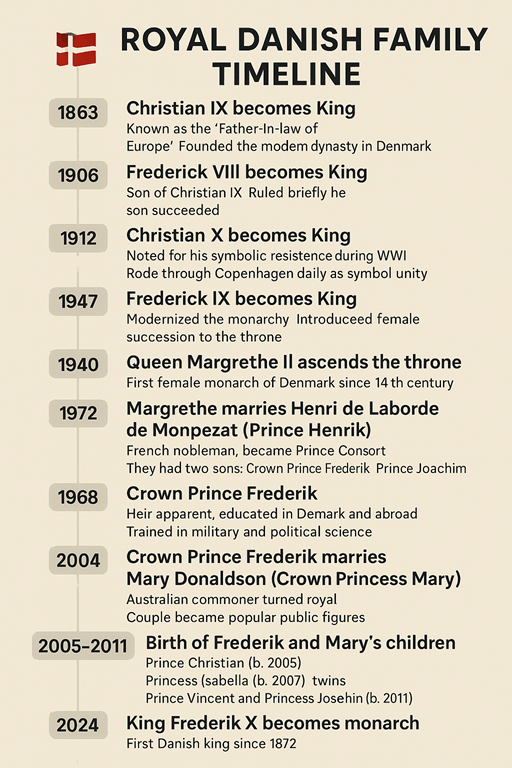
Meet the Key Players in Denmark’s Royal Drama
King Frederik X
In January 2024, Denmark witnessed a historic transition when Queen Margrethe II abdicated the throne after 52 years, making way for her son to become King Frederik X.
The first Danish monarch to abdicate in nearly 900 years, Margrethe’s decision marked a significant moment in Danish royal history.
Frederik, born in 1968, brings a unique background to the throne. With military training in all three branches of Denmark’s armed forces and a special connection to the navy, Frederik has demonstrated commitment to public service.
His educational background includes studies at Harvard University, and he holds the distinction of being the first Danish royal to complete a full university degree.
The new king is known for his environmental advocacy and founded the Crown Prince Frederik Fund, which supports educational and scientific projects.
His passion for athletics has also endeared him to many Danes—he’s completed multiple marathons, an Ironman competition, and even participated in a dogsled expedition across Greenland.
Every year he participates in Royal Run which is a laid back and fun running arrangement in every bigger city in Denmark.
Frederik’s journey to becoming a beloved royal wasn’t always smooth. In his youth, the Danish media often portrayed him as a reluctant heir who enjoyed the nightlife perhaps too enthusiastically.
His transformation into a dedicated public servant and family man represents a compelling personal growth narrative that many Danes find relatable.
Queen Mary: From Tasmania to the Throne
Perhaps the most fascinating modern chapter in the Danish royal story is that of Queen Mary. Born Mary Donaldson in Tasmania, Australia, she met Crown Prince Frederik at a Sydney pub during the 2000 Olympics.
Their chance encounter blossomed into romance, and their 2004 wedding captured international attention.
Mary’s journey from ordinary Australian to European royalty seems like a fairy tale, but her success in the role stems from dedicated hard work.
She mastered the Danish language—notoriously difficult for non-native speakers—and immersed herself in Danish culture and traditions.
Today, she speaks Danish fluently and has become one of the most popular members of the royal family.
Queen Mary’s background in advertising and communications has served her well in royal duties.
She champions causes including women’s rights, mental health awareness, and sustainability through the Mary Foundation.
Her fashion choices regularly make headlines, and she’s considered a style icon in Denmark and beyond.
What’s particularly remarkable about Mary’s story is how she’s maintained authenticity while adapting to royal protocols.
Far from seeming like an outsider, surveys consistently show her among the most admired public figures in Denmark—a testament to how thoroughly she’s embraced her adopted homeland.
Queen Margrethe II: The Artist Queen
Though no longer reigning, Margrethe II remains a beloved figure in Danish life. Her 52-year reign transformed the monarchy and modernized its relationship with the Danish people.
Known for her artistic talents, Margrethe has illustrated books (including Danish editions of Lord of the Rings), designed costumes for ballet and theater productions, and exhibited her paintings internationally.
Margrethe’s reign began in 1972 after her father King Frederik IX died. At that time, Denmark had only recently changed its succession laws to allow women to inherit the throne. Her accession marked the beginning of a new era for the Danish monarchy.
Throughout her reign, Margrethe maintained high approval ratings thanks to her thoughtful approach to royal duties and genuine connection with Danish citizens.
Her annual New Year’s Eve speech became a national tradition, with many Danes considering it an essential part of their holiday celebrations.
Now serving as Queen Dowager, Margrethe continues to participate in cultural events and represent Denmark on the international stage, though with a reduced schedule of official duties.
The Business of Being Royal: Finances and Function
One common question about modern monarchies is how they’re funded. The Danish Royal Family receives an annual allowance through the Civil List, approved by the Danish Parliament.
In 2023, this amount was approximately 143,8 million Danish kroner (about $21.8 million USD).
This funding covers official expenses, staff salaries, and maintenance of royal properties.
Unlike some royal families, Denmark’s royals don’t personally own most of the castles and palaces they use.
These properties belong to the Danish state, though the royals have the right to use them.
The main exception is Marselisborg, which is located in Aarhus.
The royal family’s personal wealth remains somewhat opaque, though estimates place their net worth at approximately $40 million.
This includes personal properties, investments, and private collections of art and jewelry. While certainly comfortable, the Danish royals aren’t among Europe’s wealthiest monarchs—a fact that aligns with Denmark’s egalitarian social values.
Royal Residences: Where Danish Royalty Calls Home
The Danish Royal Family divides their time between several historic residences, each with distinct functions and traditions:
Amalienborg Palace
Located in central Copenhagen, Amalienborg serves as the main residence.
It’s actually a complex of four identical classical palaces arranged around an octagonal courtyard. The changing of the Royal Guard—called Den Kongelige Livgarde—occurs daily at noon and has become a popular tourist attraction.
Visitors to Copenhagen can tour parts of Amalienborg, including the museum housed in Christian VIII’s Palace.
The museum displays private royal apartments from the 19th century and gives insight into royal daily life through the generations.
Fredensborg Palace
About 40 kilometers north of Copenhagen, Fredensborg Palace functions as the spring and autumn residence.
This baroque masterpiece sits on the shores of Lake Esrum and features spectacular gardens. The royal family traditionally hosts visiting heads of state here, and it’s been the setting for numerous royal celebrations.
Marselisborg Palace
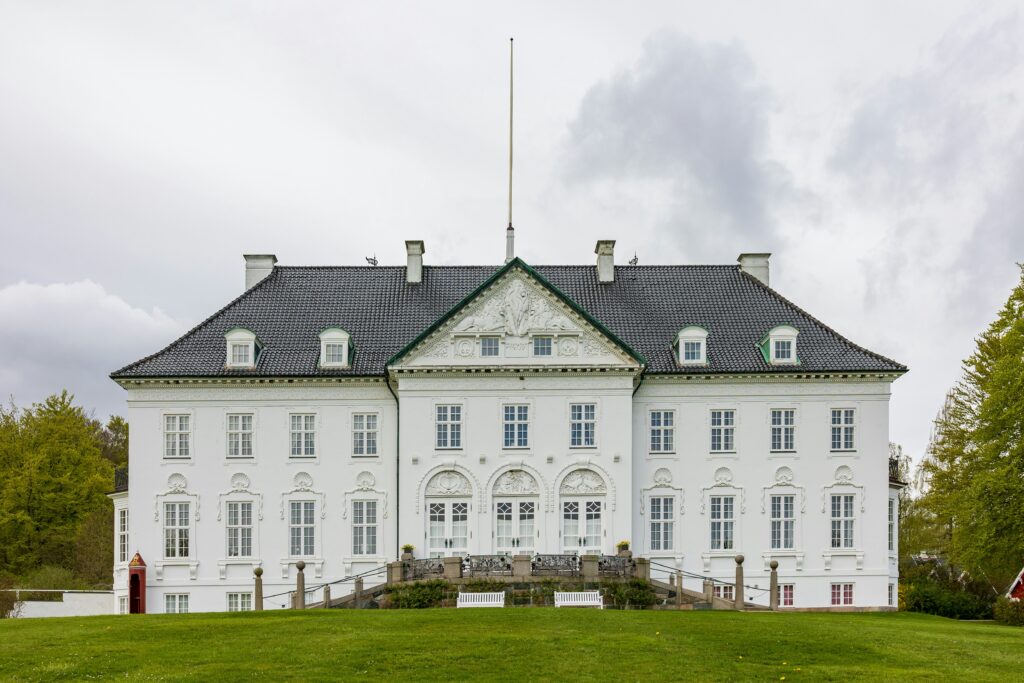
Located in Aarhus, Denmark’s second-largest city, Marselisborg serves as the royal summer residence.
Queen Margrethe received this palace as a wedding gift from the people of Denmark in 1967. When the royal family is in residence, the changing of the guards takes place here daily at noon.
Gråsten Palace
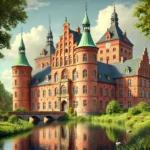
Gråsten palace in Southern Jutland has particular significance for the royal family.
Its white façade and picturesque setting have made it a favorite retreat for generations of Danish royals, particularly during July when they often spend extended time here.
Royal Traditions: Balconies, Birthdays, and Beyond
Danish royal traditions combine pomp and ceremony with the characteristic Scandinavian informality.
One beloved tradition is the balcony appearance, where royal family members greet the public from the balcony of Amalienborg Palace during significant celebrations. These appearances typically occur on royal birthdays, anniversaries, and after major events like royal weddings.
The tradition began in the early 20th century and has evolved into a powerful symbol of connection between the monarchy and citizens.
During these appearances, large crowds gather in the palace square, waving Danish flags and cheering for the royals—a visual representation of the monarchy’s continued popularity.
Royal birthdays receive special attention in Denmark. On the monarch’s birthday, the Royal Life Guards perform a special ceremonial parade, and the public can sign congratulatory lists at the palaces.
For milestone birthdays, more elaborate celebrations may take place, often including gala dinners attended by international royalty and dignitaries.
The Danish royal traditions reflect the country’s cultural values—they maintain a sense of history and occasion while avoiding excessive formality or separation from ordinary citizens.
The Royal Family During World War II: A Nation United
During the Nazi occupation of Denmark in World War II, King Christian X (great-grandfather of Queen Margrethe) became a powerful symbol of national resistance and unity.
Though the popular story that he wore a yellow star in solidarity with Danish Jews has been debunked as a myth, his actual actions were nonetheless significant.
Christian X remained in Denmark throughout the occupation, unlike many other European monarchs who fled to exile.
His daily horseback rides through Copenhagen, unaccompanied by German soldiers, became a symbol of quiet defiance and hope for occupied Danes.
The royal family worked closely with the Danish government to protect Danish Jews from deportation. Through diplomatic pressure and the remarkable rescue operation that transported nearly 7,000 Danish Jews to safety in neutral Sweden, Denmark managed to save most of its Jewish population—a proud chapter in both Danish and royal history.
This period cemented the modern relationship between the Danish people and their monarchy.
Rather than being distant figures, the royals demonstrated their commitment to all Danish citizens regardless of background—a legacy that continues to influence how today’s royal family approaches their role.
The Royal Jewelry Collection: Crowns, Tiaras, and Treasures
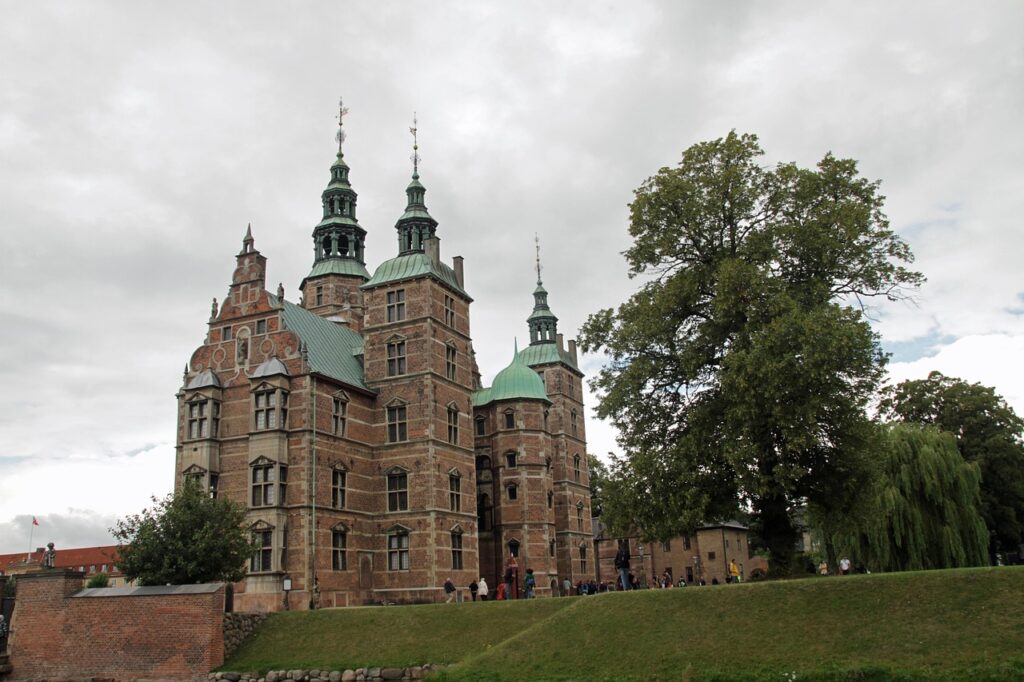
The Danish royal jewels represent centuries of history and artistry. Unlike in some monarchies, most of Denmark’s royal jewels belong not to individual family members but to the crown itself—they’re passed from monarch to monarch rather than inherited personally.
The most spectacular pieces can be viewed at Rosenborg Castle in Copenhagen, where the Danish Crown Jewels are displayed.
The collection includes the Crown of Christian V (created in 1671), the Queen’s Crown from 1731, and various orbs and scepters. These items are only used on rare occasions, such as lying in state after a monarch’s death.
Of particular interest are the crown jewel sets designated for the queen’s use. These include the Pearl Poiré Tiara (featuring 18 pear-shaped pearl drops), the Danish Ruby Parure (a set of jewelry featuring rubies and diamonds arranged in a berries-and-leaves design), and the stunning Emerald Parure.
Many of these pieces have fascinating histories. The Ruby Parure, for instance, originally belonged to Désirée Clary—Napoleon Bonaparte’s former fiancée who later became Queen of Sweden. The set eventually passed to the Danish royal family through marriage connections.
Royal watchers eagerly anticipate state dinners and gala events where these historic jewels make rare public appearances, adorning Queen Mary or other female members of the royal family.
Public Opinion: Do Danes Actually Like Their Monarchy?
Surveys consistently show strong support for the monarchy among Danish citizens. Approximately 70-80% of Danes favor maintaining the royal institution—numbers that have remained stable for decades.
This popularity stems from several factors. First, the Danish monarchy has successfully positioned itself as a unifying national symbol above politics. In a time of increasing political polarization, this non-partisan role holds significant value.
Second, the royal family has modernized appropriately without sacrificing tradition. They maintain enough ceremony to preserve the institution’s historic character while avoiding perceptions of being overly privileged or out of touch.
Third, individual royals have generally avoided major scandals while demonstrating commitment to causes that resonate with Danish values like environmentalism, social welfare, and cultural preservation.
The Danish approach to monarchy differs significantly from some other European countries. Danish royals are certainly respected, but they’re not treated with excessive deference.
They shop at local stores, send their children to public schools, and participate in community events. This accessibility has been key to their continued relevance in a progressive Scandinavian democracy.
The Future of Denmark’s Monarchy
As King Frederik X begins his reign, questions naturally arise about the future direction of the Danish monarchy. Several factors suggest continued stability for this ancient institution.
Crown Prince Christian, born in 2005, represents the next generation. His education at public schools reflects the family’s modern approach, balancing privilege with normal experiences.
The young prince has gradually begun taking on more public duties, preparing for his eventual role.
The monarchy’s popularity among younger Danes remains strong, defying the trend in some countries where support for royalty decreases among younger generations.
This suggests the institution has successfully remained relevant to contemporary Danish society.
Denmark’s monarchy appears well-positioned to continue evolving with the times while maintaining its core functions as a symbol of national identity and continuity.
As long as it continues balancing tradition with accessibility, the House of Glücksburg seems likely to remain at the heart of Danish national life for generations to come.
Pingback: Everything you need to know about Denmark – All you need to know about Denmark