“Wait, Denmark and Holland—they’re the same place, right?” If you’ve ever heard (or asked!) this question, you’re not alone.
Despite both being flat, bike-loving nations in Northern Europe, Denmark and the Netherlands (often mistakenly called “Holland”) are entirely separate countries with distinct languages, histories, and cultures. Let’s settle this confusion once and for all – and explore why these two nations are worlds apart.
Geography 101: Where Are Denmark and the Netherlands?
Denmark perches on the Jutland Peninsula, bordering Germany to the south, with over 400 islands dotting the Baltic and North Seas. Its capital, Copenhagen, sits on Zealand, the largest island.
The Netherlands, meanwhile, lies 500 km southwest of Denmark, sandwiched between Belgium and Germany. Its capital, Amsterdam, is part of a densely populated coastal region historically known as Holland—which is not the country’s official name.
Key Differences:
- Size: Denmark covers 42,933 km²; the Netherlands spans 41,543 km² (similar area, but Denmark has 5.9 million people vs. the Netherlands’ 17.8 million).
- Topography: Denmark’s highest point is 170.86 m (Møllehøj); the Netherlands’ is 322.7 m (Mount Vaals), but 26% of the country is below sea level.
Map it out: CIA World Factbook – Denmark | CIA World Factbook – Netherlands
Holland vs. Netherlands: Why the Mix-Up Happens
Let’s clarify the elephant in the room: Holland is not a country. It refers to two provinces (North Holland and South Holland) that historically dominated the Netherlands’ economy and culture. The Dutch government officially dropped “Holland” as a national nickname in 2020 to promote the entire country.
Why the confusion with Denmark?
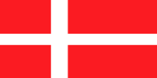
- Both nations have red-and-white flags (Denmark’s has a Nordic cross; the Netherlands’ is horizontal tricolor).
- They share a reputation for biking (Copenhagen and Amsterdam are among the world’s most cycle-friendly cities).
- Stereotypical imagery: Windmills (Netherlands) vs. hygge (Denmark).
History & Origins: Vikings vs. Sea Traders
Denmark traces its roots to Viking Age (8th–11th centuries), when Danish raiders ruled parts of England and France. The Kalmar Union (1397–1523) united Denmark, Norway, and Sweden under one crown.
The Netherlands, by contrast, emerged as a maritime powerhouse in the 17th-century “Golden Age,” when Dutch East India Company traders dominated global commerce. While Denmark colonized Greenland and the Faroe Islands, the Netherlands controlled Indonesia, Suriname, and the Caribbean.
Fun fact: The Dutch once traded Manhattan to the British for Run Island (now part of Indonesia) in 1667.
Dive deeper: National Museum of Denmark – Viking History | Rijksmuseum – Dutch Golden Age
Language: Danish vs. Dutch
Both languages are Germanic, but they’re not mutually intelligible:
| Danish | Dutch |
|---|---|
| North Germanic branch | West Germanic branch |
| 5.6 million native speakers | 24 million native speakers |
| Known for “stød” (glottal stops) | Uses guttural “g” (e.g., Gouda) |
| Alphabet has 29 letters (æ, ø, å) | 26 letters |
Try pronouncing:
- Danish: Rødgrød med fløde (red porridge with cream)
- Dutch: Scheveningen (a coastal town)
Culture & Lifestyle: Hygge vs. Gezelligheid
Denmark’s hygge (coziness) and the Netherlands’ gezelligheid (conviviality) are cultural cousins—but not twins.
Denmark
- Food: Smørrebrød (open-faced sandwiches), licorice, Carlsberg beer.
- Design: Minimalist furniture (Arne Jacobsen), LEGO.
- Traditions: Burning witches on Sankt Hans Aften (Midsummer’s Eve).
Netherlands
- Food: Stroopwafels, bitterballen, Gouda cheese.
- Design: Delftware pottery, Van Gogh’s art.
- Traditions: King’s Day (orange-themed street parties).
Shared quirks: Both rank among the world’s happiest nations, thanks to strong social welfare systems and work-life balance.
Political Systems: Monarchies With a Twist
Denmark: A constitutional monarchy with Queen Margrethe II as head of state. The Folketing (parliament) governs alongside the prime minister.
Netherlands: Also a constitutional monarchy, currently under King Willem-Alexander. The States General (parliament) includes the Senate and House of Representatives.
Key difference: Denmark’s Faroe Islands and Greenland have self-rule; the Netherlands’ Caribbean islands (e.g., Aruba) are constituent countries within the Kingdom.
Compare constitutions: Folketinget (Danish Parliament) | House of Representatives (Netherlands)
FAQs: Denmark vs. Netherlands vs. Holland
Q: Do Denmark and the Netherlands use the same currency?
A: Denmark uses the krone (DKK); the Netherlands uses the euro (EUR).
Q: Are Dutch and Danish people similar?
A: While both value directness, Dutch communication is famously blunt (“Dutch directness”). Danes prioritize consensus and Janteloven (modesty).
Q: Is Amsterdam in Denmark?
A: No! Amsterdam is the capital of the Netherlands. Copenhagen is Denmark’s capital.
Q: Which country has more bikes?
A: The Netherlands—with 23 million bikes for 17.8 million people. Denmark has 5 million bikes for 5.9 million people.
Alike but not twins
Denmark and the Netherlands may share a love of cycling, flat landscapes, and progressive values, but their identities are as distinct as smørrebrød and stroopwafels. Denmark’s Viking heritage and minimalist design contrast with the Netherlands’ Golden Age art and tulip-filled polders. As for Holland? It’s just the tip of the Dutch iceberg.
Still Curious?
Book a trip to Copenhagen’s Nyhavn or Amsterdam’s canals—or better yet, visit both. You’ll quickly see why these two nations deserve their own spotlight.
Related posts:
 21 Surprising Facts About Denmark You Didn’t Know
 Can You Survive in Denmark Without Speaking Danish?
 Most Stunning Castles to Visit in Denmark
 Is Denmark Gay Friendly? A Safe Haven for LGBTQ+ People
 Understanding ‘Arbejdsglæde’: The Danish Concept of Work Happiness
 A Brief History of Denmark: From Vikings to Modern Democracy